
Customising a vehicle is something many car owners enjoy and installing a car body kit is one of the most noticeable ways to change a car’s appearance. From sharper bumpers to aggressive side skirts and spoilers, a well-designed kit can transform a standard car into something far more distinctive. However, buying a body kit without doing some research can lead to poor fitment, unexpected costs or disappointing quality.
Before making the purchase, it helps to go through a checklist. Understanding materials, compatibility and installation requirements can save both time and money while ensuring you choose the right kit for your vehicle.
What is a Car Body Kit?
A car body kit is a set of exterior components designed to modify or enhance the look of a vehicle. These kits replace or attach to existing factory parts to give the car a more customised style.
Some drivers install body kits purely for visual appeal, while others choose them to improve aerodynamics or create a sportier road presence.
Components Included in a Car Body Kit
Most kits come with several parts that change the shape of your car’s exterior. Usually, you get a front bumper or lip, side skirts and a rear bumper or diffuser. Some kits also have spoilers, fender extensions or hood scoops.
Certain premium car modification kits may include additional styling elements such as splitters, air vents or carbon fibre trim pieces that add a more performance-oriented look.
Why Do Car Owners Install Car Body Kits?
The most common reason people install body kits is to change the visual character of their car. Many enthusiasts search for the coolest car body kits to make their vehicle stand out from factory models.
For some drivers, body kits also help create a cohesive theme for a modified vehicle, especially when combined with wheels, suspension upgrades and other visual changes.
Why Do You Need a Pre-Purchase Checklist?
Buying a body kit can be exciting but it should never be an impulsive decision. A kit that looks great online may not fit perfectly on your specific car model or may require additional work during installation.
A checklist helps you think about practical factors such as durability, installation complexity and long-term maintenance. It also ensures you do not overlook costs beyond the purchase price.
Complete Pre-Purchase Checklist Before Buying a Car Body Kit
Use this checklist to make a well-informed and practical decision.
1. Check Vehicle Compatibility
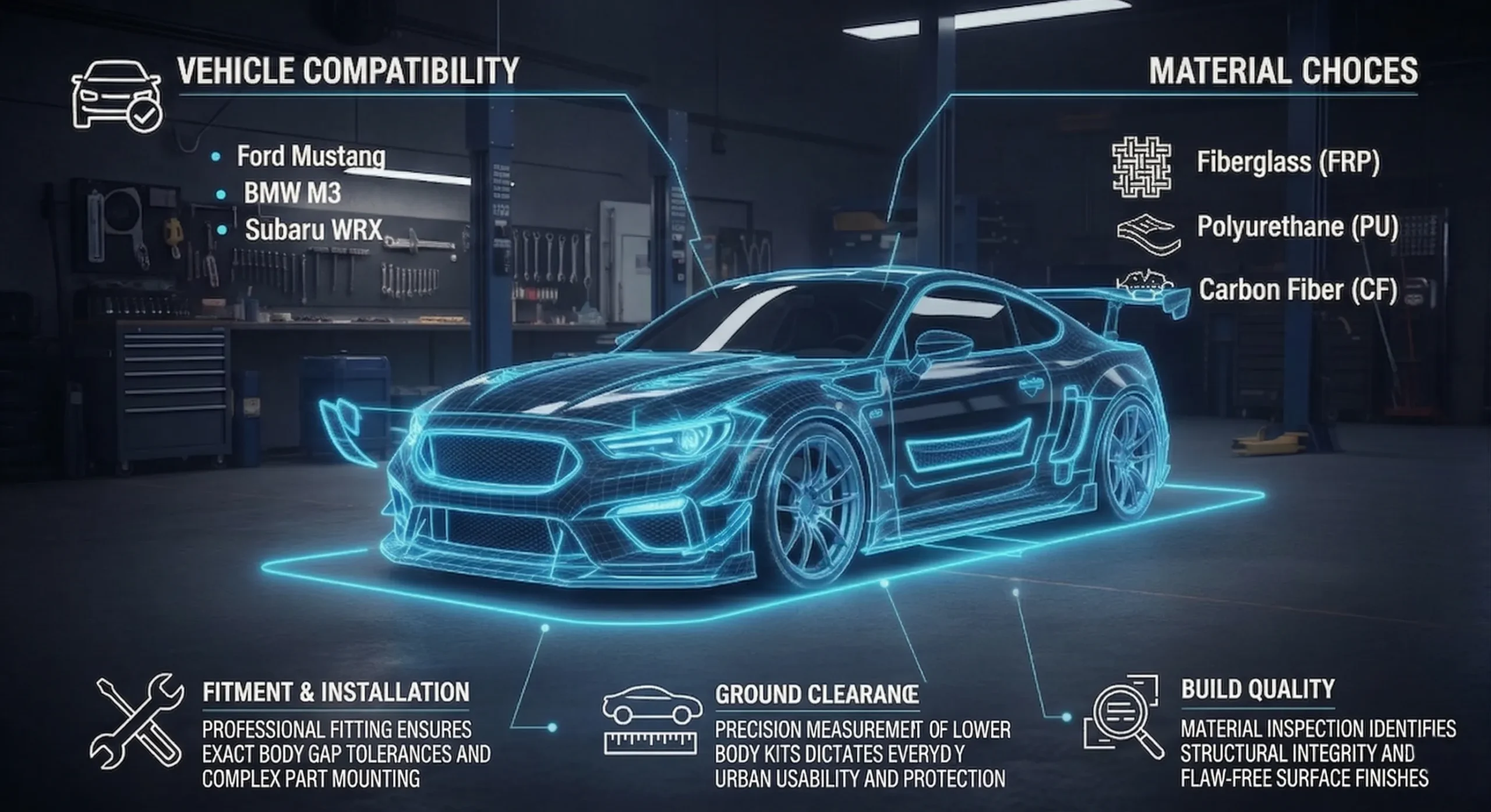
The most important step is confirming that the car body kit is designed for your exact car model. Even small differences between model years can affect how well a kit fits. Before ordering, verify the compatibility details provided by the manufacturer or seller.
Find the right body kits for your car model
2. Choose the Right Car Body Kit Material
Body kits are made from different materials, each with distinct advantages and drawbacks:
- Fiberglass: Affordable and easy to shape but prone to cracking.
- Polyurethane: Flexible and lasts longer; well-suited for daily driving.
- Carbon Fibre: Light, strong, and provides a high-end, performance look.
3. Consider Fitment and Installation Requirements
Some kits are tricky to install. You may need to adjust, drill or trim parts to make them fit, which can take more time than you planned. Understanding the complexity can help you estimate the overall body kit installation cost.
4. Evaluate Build Quality
Poor quality parts might have rough edges, weak spots for attaching or surfaces that need a lot of extra work. Review product images carefully to identify well-made car modification kits.
5. Check Ground Clearance
Many body kits are lower than original parts. If you often drive over speed bumps or up steep driveways, a very low car body kit could cause significant scraping or damage.
6. Verify Legal and Safety Regulations
Rules about car modifications vary by region. Before installing, check your local rules to ensure your modifications are street-legal and meet safety standards.
7. Look at Paint and Finish Options
Some body kits are unpainted. If painting is required, include this cost in your budget. Professional color matching can increase the total investment significantly.
8. Compare Prices
Body kit prices vary by design, brand and material. Lower-end kits might need more preparation before installation, so consider both the kit price and the labor costs.
9. Read Reviews and Seller Reputation
Reviews often reveal useful information about fitment and durability. Well-established sellers typically provide better customer support and clearer product specifications.
10. Warranty and Return Policy
A warranty is a good indicator of product confidence. Review the coverage and return conditions carefully to protect yourself in case the kit arrives damaged or has manufacturing defects.
Common Mistakes to Avoid When Buying a Car Body Kit
One mistake many buyers make is choosing style without considering practicality. It is easy to overlook how the kit will perform during everyday driving.
Another mistake is ignoring installation requirements. Some kits appear affordable at first but require expensive fitting work that increases the total cost significantly. Finally, avoid purchasing from unreliable sellers without checking feedback first.
Tips to Choose the Right Car Body Kit
Start by deciding what you want from the modification. Choose a design that complements the original lines of your vehicle so it looks enhanced rather than disproportionate. It also helps to look at real photos of the body kits installed on similar cars to get a realistic idea of the final result.
Conclusion
Installing a car body kit can be a rewarding upgrade that dramatically changes the appearance of a vehicle. However, choosing the right kit requires careful planning and attention to detail.
Overboost offers a range of car accessories that complement your build, from functional add-ons to styling upgrades. Explore our range of aftermarket car body kits and accessories to find the perfect fit for your vehicle.
FAQ
What should you check before buying a car body kit?
Check compatibility with your specific car model, material quality, installation requirements, total cost, and the seller’s reputation.
Which material is best for a car body kit?
Polyurethane is ideal for daily use due to flexibility. Carbon fibre is better for lightweight, performance-focused builds.
Do body kits affect a car’s ground clearance?
Yes, many body kits lower the car’s exterior profile, which can reduce ground clearance and impact everyday usability.
Is professional installation required for body kits?
While some kits can be DIY, professional installation is recommended to ensure proper fitment, alignment, and secure mounting.
Are aftermarket body kits legal to install on cars?
Most are legal, but regulations vary by location. Always check local vehicle modification laws before installing any kit.
Leave a Reply