Overboost
, there’s a massive technical hurdle you need to clear. It isn’t just about how the kit looks in the box—it’s about how it survives the first speed bump you encounter.
Choosing between a fiberglass body kit, polyurethane, or carbon fiber is a balancing act of budget, weight, and “oops” factor. Let’s get real about what these materials are actually like to live with.
Fiberglass – The OG Choice: Affordable, Lightweight, but High-Maintenance
Fiberglass (often called FRP) is the industry veteran. It’s been around since the dawn of tuning because it’s relatively cheap to make and can be molded into wild shapes that plastic just can’t touch.
Pros of Fiberglass Body Kits
- Easy on the Wallet: It’s the most accessible way to change your car’s profile.
- Race-Ready Weight: There’s a reason grassroots drifters love it—it’s light.
- Sun-Proof: Unlike some plastics, fiberglass won’t warp or “sag” when the sun is beating down on it in a parking lot.
- Infinite Lives: If you crack it, you don’t necessarily have to bin it. A little resin and some sanding can bring it back from the dead.
Cons of Fiberglass Body Kits
- Brittle as Glass: It has zero “give.” Tap a curb at 2 mph, and it will likely crack or shatter.
- The “Fitment” Struggle: These aren’t Lego pieces. Curing in the mold can cause warping, so be prepared for your body shop to spend hours trimming and sanding to get it right.
- Rough Finishes: They usually ship in a rough primer that requires a lot of prep before paint.
Best Use Cases for Fiberglass
If you’re building a dedicated show car or a weekend warrior where you don’t mind a little “sweat equity” to get the fitment perfect, fiberglass is your best friend.
Pro Tip: When buying fiberglass, always factor in the “Installation Tax.” What you save on the part, you might end up paying the body shop in labor hours.
Polyurethane – The Daily Driver’s Dream
If you’re worried about driveways and speed bumps, polyurethane body kits (often just called “urethane”) are the answer. Think of it like a heavy-duty version of your factory bumper—tough, flexible, and forgiving.
Pros of Polyurethane Body Kits
- Bounce-Back Ability: You can literally bend a urethane lip, and it will pop back into shape. It’s incredibly impact-resistant.
- OEM-Level Fit: Because they are made in high-pressure molds, they usually bolt on with very little drama.
- Rock-Chip Resistant: It’s much harder to chip than fiberglass.
Cons of Polyurethane Body Kits
- The Weight Penalty: It’s heavy. If you’re building a time-attack car, this is the “wrong” kind of weight.
- Paint Prep: You need special “flex agents” in your paint, or it will flake off the first time the bumper flexes.
- Heat Sensitivity: In extreme heat, unpainted or unsupported urethane can get a bit “rubbery” and sag over time.
Best Use Cases for Polyurethane
Daily drivers. Period. If you want to look good without constantly worrying about a hairline crack every time you exit a steep driveway, go urethane.
Carbon Fiber – The Performance Gold Standard
Carbon fiber body kits are the ultimate flex—both in performance and status. It’s aerospace technology brought down to the asphalt.
Pros of Carbon Fiber Body Kits
- Weight vs. Strength: It’s lighter than fiberglass and stronger than steel. It’s the peak of performance engineering.
- The Look: That 2×2 weave under a deep clear coat is a head-turner. Most people don’t even paint it—they want the carbon to show.
- Rock Solid: It doesn’t flex under high-speed aerodynamic loads, which is vital for splitters and wings.
Cons of Carbon Fiber Body Kits
- Sticker Shock: It’s expensive. You’re paying for a complex, labor-intensive manufacturing process.
- Unforgiving: Like fiberglass, it’s brittle. If you shatter it, you can’t really “patch” it without ruining that beautiful weave.
Best Use Cases for Carbon Fiber
Exotics, high-end builds, and anyone who actually cares about weight-to-power ratios. It’s the material of choice for those who want the best and have the budget to match.
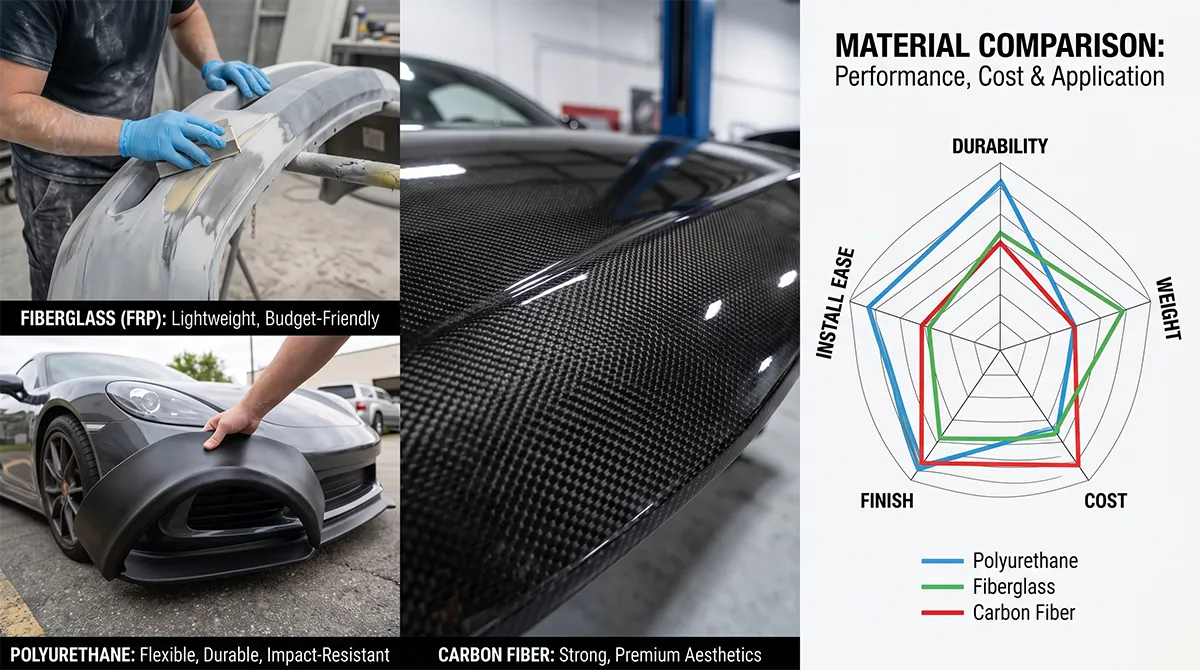
The Head-to-Head Comparison

Leave a Reply